№ 01 · Short story
Baba Yaga — the Ancient Goddess Who Tests the Hero
or how to gain sacred knowledge?
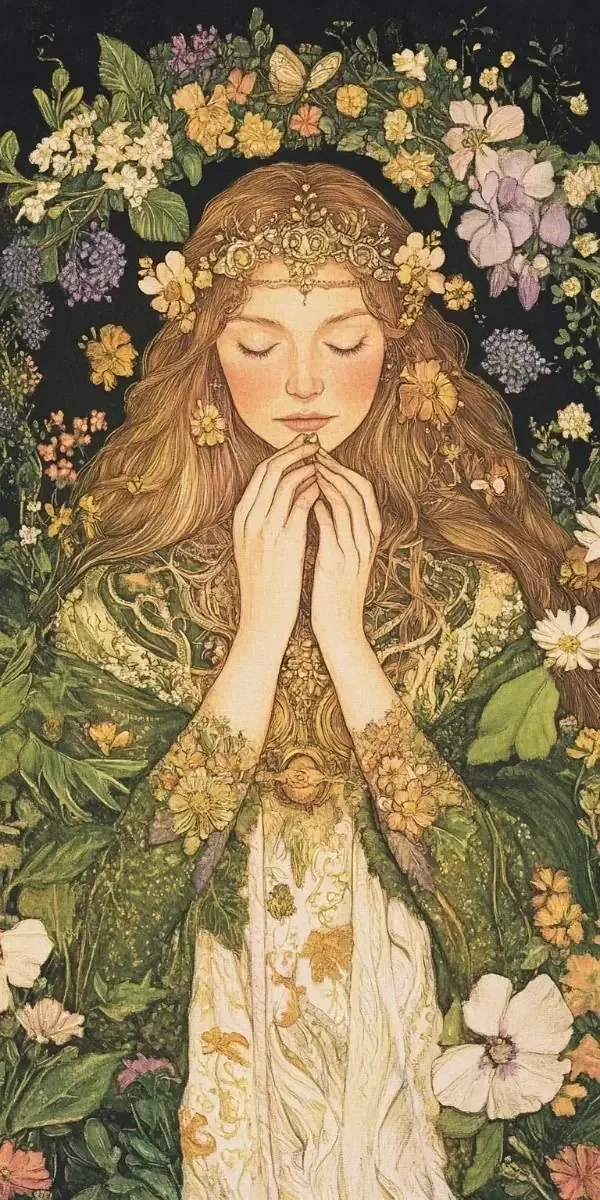
The image of Baba Yaga has been widely popularised: a hunchbacked old woman with a bone leg and an iron tooth who lives in a hut on chicken legs deep in a dense forest, “sits on the stove, on the ninth brick,” and kidnaps children. Let us look at this figure of folk mythology more closely — and perhaps we will find something unexpected.
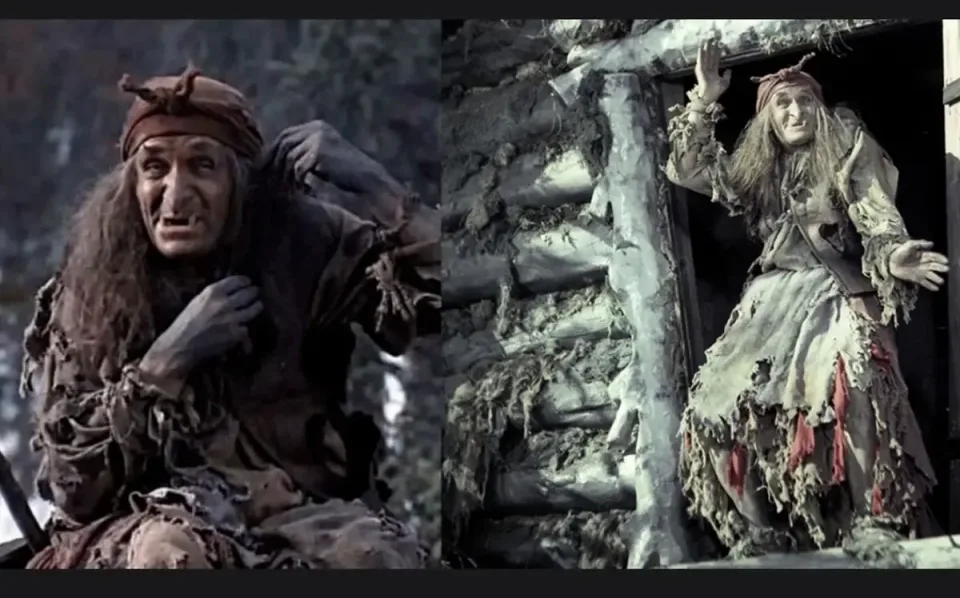
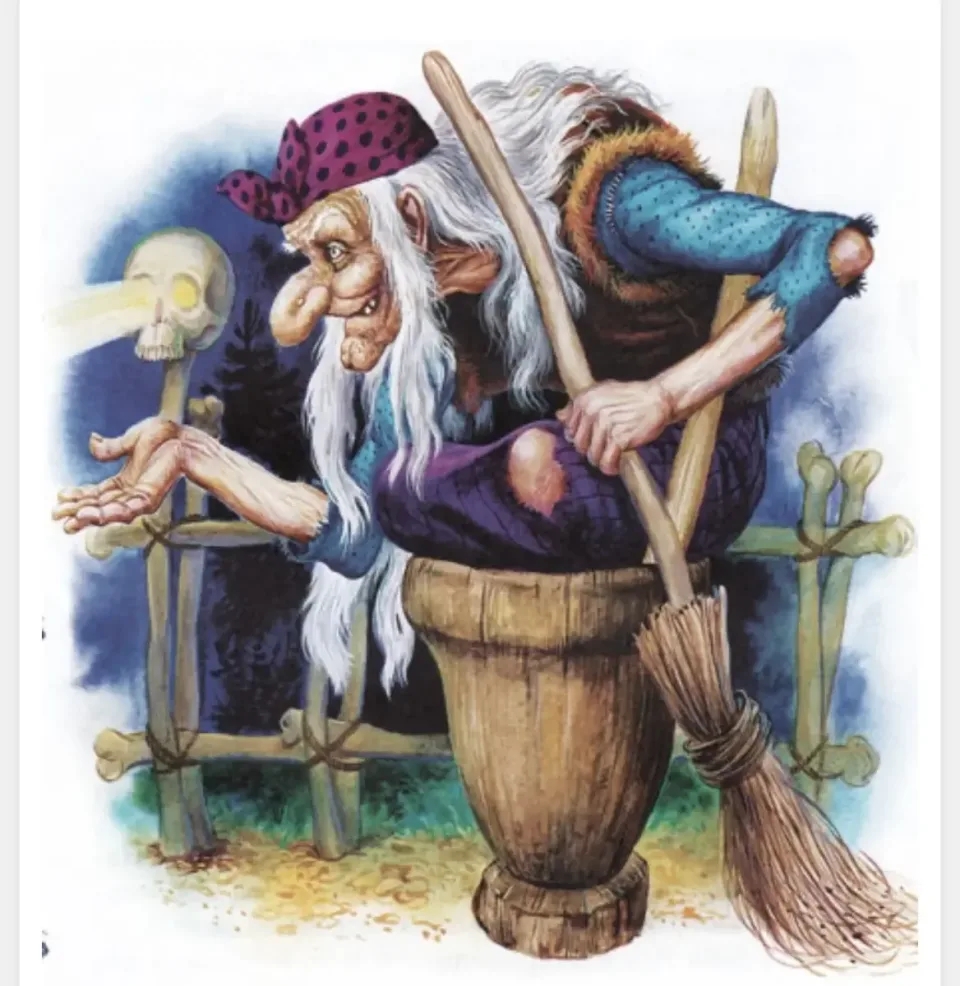
Heroes and heroines come to her for help, and after rites and trials she helps them with wise counsel or grants them magical artefacts. She lives far away in the Forest. The forest was the most ancient of folk sanctuaries; it is called dense, mysterious, dark, because it hides secrets awaiting their fearless discoverer. The bone leg suggests a likeness to the living dead, to one who stands at the border between worlds. Baba Yaga’s hair is loose and shaggy, her braids undone. In the culture of the ancient Slavs, loose hair was a sign of inhuman power and sorcerous abilities. Hair was also unbraided on the dead. She has an iron tooth — that is, an artificial, non-human one; iron, along with silver, served as a weapon against unclean spirits, so the very fact that she has it tells us Yaga does not belong to the unclean powers. Yet she cannot be counted among the living either: she possesses knowledge too great for mortals. Yaga knows the languages of animals and plants and commands the elements.
Here is how her hut is described in the tale Vasilisa the Wise:
“Vasilisa walked all night and all day, and only by the next evening did she come out onto the clearing where Yaga-Baba’s hut on chicken legs stood. The fence around the hut was made of human bones, and on the fence stuck human skulls with eyes; instead of doors at the gate there were human legs, instead of bolts — hands, instead of a lock — a mouth with sharp teeth.”
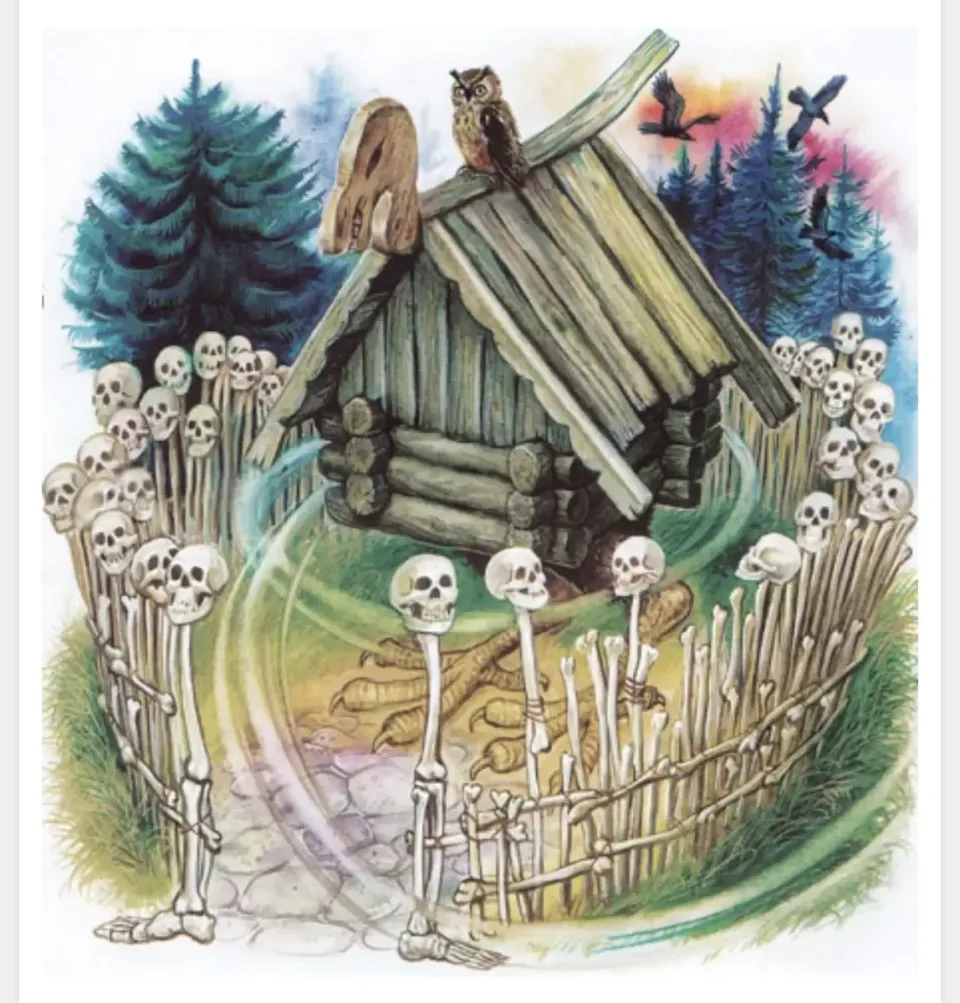
The word kurya has several meanings, but one thing is certain: “kurya” does not mean a chicken’s leg. Kurya was the name for a smoking, hot place that could spin like a funnel; priests used fumigation in their rites. In other words, Baba Yaga’s hut is a gateway to another world. The hut turns around its own axis: “there stands a hut on chicken feet, turning round and round.” Rotation — a line closed into a circle — is a symbol of endless development, of evolution and of the ordering of space. The hut is surrounded by a fence of burning skulls. The skull is a symbol used in many cults, and a skull with glowing eye sockets is a symbol of the death of the ordinary, worldly mind. Light symbolises knowledge, and so mortal, limited consciousness is replaced by consciousness that is immortal and true. Far from everyone may enter this Other World — just look how many bones and skulls lie around — only the Worthy Chosen hero who passes all of Baba Yaga’s trials and initiations.
In mythological consciousness, the Human being serves as a universal model of the Universe. Human — Home — Cosmos. Why does she lie on the stove, on the ninth brick? Baba Yaga “lies” at the centre of the house. The hearth was considered a sanctuary, which means Baba Yaga rests upon the sacred, transforming power of fire. The number Nine is a symbol of infinity and of the fullness of being, of knowledge, of the world. The ninth brick tells us that the domain Yaga presides over — the domain of fire’s transforming power — is wholly subject to her and wholly known to her. It is the sphere of endless transformation, of endless cycles of death and rebirth.
“There stands a hut on a chicken leg, with a single window.
— Little hut, little hut, turn your back to the forest and your front to me! Let me go in, and let me come out again.
The hut turned its back to the forest and its front to Ivan Tsarevich. He went in, and there sat Baba Yaga.
— Phew, phew, — she says, — the Russian scent has never been heard of here nor seen, and now the Russian scent has come of its own accord.” (The Tale of the Rejuvenating Apples and the Water of Life)
In other words, the hero knows perfectly well whom he has come to and how to speak to her — he knows the password, so to speak.
In the tale Vasilisa the Wise we read:
“Vasilisa approached the old woman in fear and, bowing low, said:
- It’s me, grandmother! My stepmother’s daughters sent me to you for fire.
Very well, - said Baba Yaga, - I know them. First you live with me a while and work for me, and then I’ll give you fire; and if not, I’ll eat you!”
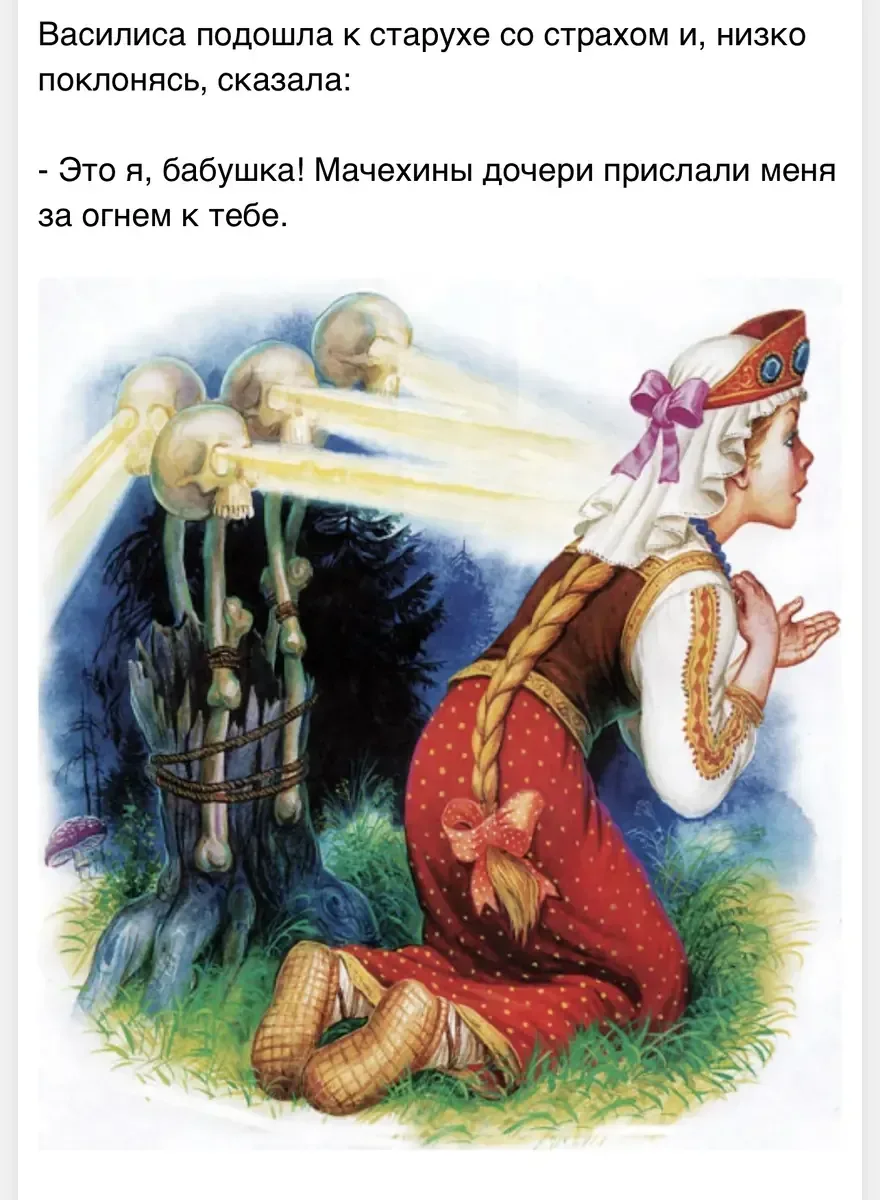
So the heroine approaches her with fear and reverence! She bows low and asks to be given fire. Fire is a symbol of knowledge: Prometheus brought fire to people, meaning he passed knowledge on to them. Baba Yaga possesses sacred knowledge of the world and will share it with whoever passes her trials. Every initiation consists of taking a person out of society, beyond the boundaries of the settled world, a liminal period (of several days or years), and a return in a new status. In the process the person, as it were, metaphorically dies in the old status and is born into the new one!
After the hero has endured the trials, they are permitted to speak:
“Why don’t you say anything to me? - said Baba Yaga. - Standing there as if you were mute?
- I didn’t dare, - answered Vasilisa, - but if you allow me, I would like to ask you about a few things.
- Ask; only not every question leads to good: know too much and you’ll soon grow old!” (The tale Vasilisa the Beautiful)
That is, one must know how to handle sacred knowledge, otherwise it will be of no use.
“I only want to ask you, grandmother, about what I saw: as I was walking to you, a horseman on a white horse overtook me — white himself and dressed in white: who is he?
- That is my bright day, - answered Baba Yaga.
- Then another horseman on a red horse overtook me, red himself and dressed all in red; who is that?
- That is my red sun! - answered Baba Yaga.
- And what does the black horseman mean, the one who overtook me right at your gates, grandmother?
- That is my dark night — all of them my faithful servants!”
If her servants are the Day, the Red Sun and the Night, then what stands before us is a God — a Goddess.
She possesses colossal knowledge: she tells Ivan Tsarevich how to defeat Koschei the Deathless and where to find Finist the Bright Falcon; she owns fire-breathing horses, a flying carpet, self-playing gusli and the magic sword Kladenets; she holds power over life and death.
So it turns out that the Hero comes to a certain divine, all-knowing being, undergoes a rite of initiation (consecration) and emerges in a new, transformed state — different now, renewed, changed, and bearing magical artefacts that help them defeat their enemies and find happiness. Baba Yaga (Yoga, the enlightened one) “re-bakes,” as it were, the children and heroes who come to her — that is, she transforms them; her broom, a symbol of sweeping away the old and outworn, helps one move away from ordinary thinking and grasp sacred knowledge.
And in conclusion: the Hero who is not frightened by the metaphorically terrifying Baba Yaga, who looks their fears in the face and meets their Shadow (repressed, unaccepted, traumatic experience), to use the language of Jungian psychology — who does not run from them but works them through and makes sense of them — will gain sacred knowledge of the world, of life and of death.
In fairy tales I see not merely “legends of deep antiquity” but a practical guide to action, carefully preserved for us by our ancestors.
If you copy, please link back.
Comments
No comments yet. Be the first.